Sales are up, but the cash in the bank does not grow much. Lots of owners feel this way. You see money come in, then the expenses take it right back out. That is why careful small business financial planning is so important for small businesses. When you track the math in pricing, direct costs, day to day overhead, and how cash moves, you can tell the difference between a busy month and a truly profitable month.
Why Financial Management Matters for Small Business Growth
Every transaction connects to a bigger decision. Bookkeeping entries shape pricing, spending, staffing, and how much cash is available for a slow month. Without a clear picture, decisions rely on guesswork.
Growth and profitability aren’t the same thing. Revenue can rise while margins shrink because of higher direct costs, frequent discounting, or creeping overhead. A few terms help clarify this:
- Revenue means the money made from selling goods or services. This comes before any costs are taken out.
- Gross profit is the part of revenue left after direct expenses are paid.
- Gross margin shows gross profit as a share of total revenue. It is given as a percent.
- Net profit is what remains after all needed expenses are subtracted.
- Cash flow is about cash that moves into the business and cash that moves out.
There’s no single “right” margin; it depends on the industry, model, and goals.
Understanding Your Business Finances Before Making Decisions
Reliable decisions depend on records that are current and correctly categorized. Reviewing revenue by product, service, customer, or project, where records allow, often reveals patterns a single sales total hides.
It’s worth reviewing direct costs, operating expenses, gross profit and margin, net profit, accounts receivable, accounts payable, cash balances, debt obligations, and owner withdrawals, alongside budget results. When bookkeeping is incomplete, an area of the business can look stronger, or weaker, than it really is. Good financial planning for small businesses starts with this kind of accurate foundation.
Strategies to Improve Small Business Profitability
There’s no single fix, but several financial management strategies tend to surface useful opportunities. Reviewing prices against costs and value delivered is a natural starting point, along with identifying which products, services, customers, or projects run on the thinnest margins.
Look at things like waste that could have been avoided. Also check how tasks are planned and how smoothly projects run. Review supplier terms and read closely how discounts are used. Make sure overdue invoices get chased. See if repeat work is actually worth the time and effort it takes. Put budgets in place that match what is realistic.
Owners who want to improve business profitability benefit from comparing actual results against plans regularly rather than waiting until year-end. Working toward the goal to increase small business profits means weighing pricing, staffing, or supplier changes against customer experience, capacity, and quality, not just the number on the page.
How Expense Management Impacts Business Profits

Careful cost management is not the same as random cuts. One helpful move is to sort costs into groups, like direct costs, fixed operating costs, variable operating costs, one-time buys, discretionary spending, and items tied to the owner. Next, check areas such as subscriptions, supplier bills, payment fees, overtime, inventory shrink, and rework. This can reveal costs that have crept up beyond what they should be. But removing a line item does not always mean better results. If the change hurts quality, reduces capacity, affects safety, breaks compliance rules, or weakens customer loyalty, the “savings” may backfire. Not every cut improves the bottom line.
Using Financial Reports to Identify Growth Opportunities
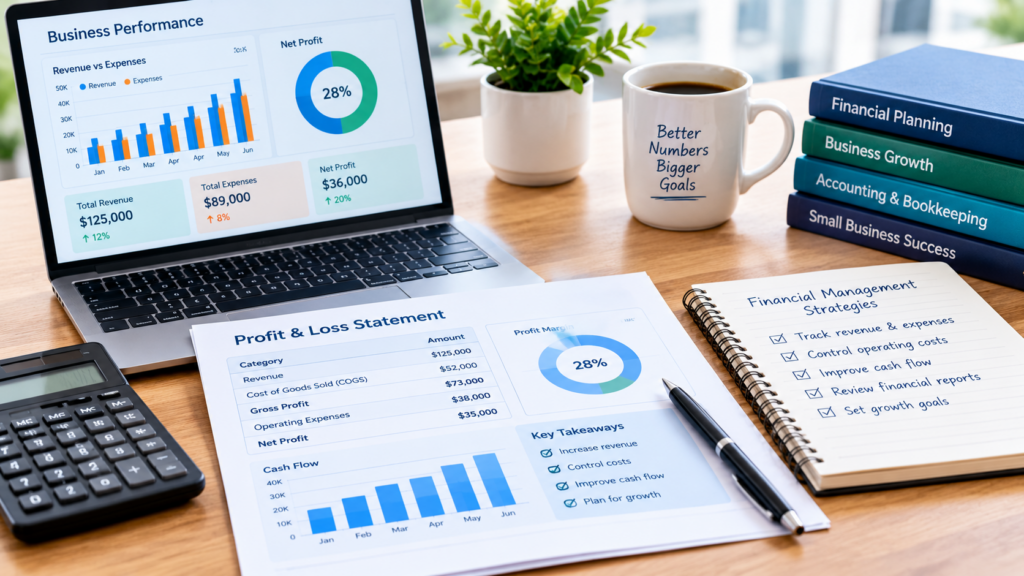
Different reports tell different parts of the story. A profit and loss statement, balance sheet, and cash-flow statement each offer a distinct view, while accounts receivable and accounts payable aging reports show what’s owed and when. A budget-versus-actual report shows how closely reality matched the plan, and product, service, customer, or project profitability reports, where available, point toward where margins are strongest.
Comparing results across periods can reveal shifting margins, rising overhead, seasonal patterns, or revenue concentrated in a few customers. Reports don’t make decisions on their own; interpreting them within daily operations and market conditions is part of good small business financial planning.
How Professional Accounting Services Support Better Decisions
Accurate categorization, reconciliation, financial-report preparation, and cash-flow visibility form the backbone of dependable bookkeeping. Accountants can also support budgeting and forecasting, expense reviews, payroll and tax coordination, software setup, and flagging unusual balances.
Meaningful business accounting advice should reflect a company’s specific circumstances rather than generic rules of thumb. Rakow & Co provides accounting services for small businesses, including bookkeeping, payroll, business tax, sales tax, and small business advice, with a dedicated accountant for each client and cloud software such as QuickBooks. Their small business advice services cover this kind of ongoing guidance around cash flow, pricing, and decisions.
Building a Long Term Financial Strategy for Business Success
Financial management works best as an ongoing habit, not a task saved for tax season. Closing and reconciling the books regularly, reviewing reports monthly, and monitoring margins and cash flow keep small issues from becoming large ones.
Updating budgets and forecasts, planning ahead for tax and debt obligations, and maintaining a suitable cash reserve add stability. Reviewing pricing and supplier costs, tracking progress against measurable goals, and reassessing plans after major changes, such as a new hire or shift in demand, keeps the plan realistic. A written plan is a guide, not a guarantee.
Conclusion
Accurate records, relevant reports, disciplined expense reviews, and informed guidance work together to support stronger decisions. None of it guarantees a specific outcome, but consistent small business financial planning gives owners a clearer view of where their money goes and where real opportunities lie. If you’d like a closer look at your numbers, book a discovery call with Rakow & Co.
Frequently Asked Questions
How can financial management improve small business profits?
Accurate records, margin analysis, controlled expenses, suitable pricing, and cash-flow monitoring support better-informed decisions, though results vary by business.
What financial strategies help small businesses grow?
Keeping up with budgeting and forecasting helps guide day to day growth. I also review pricing and check expenses each month. Margin checks and invoice handling stay on track. Regular reviews of the numbers help me make steadier decisions.
Why is financial planning important for business success?
Planning helps owners get ready for duties. It also lets them spread resources more carefully. With better information, they can judge choices. Then they can adjust when conditions shift.
How can accountants help improve business profitability?
Accountants clarify financial results, identify areas needing investigation, support forecasts, and help owners evaluate possible actions with confidence.
What financial reports help track business performance?
Income and expense statements, balance sheets, cash flow reports, and overdue aging lists can help. Budget comparison reports also help, as do sales reports and other profitability reports.