You’ve got months of transactions recorded, invoices sent, and bills paid, but when someone asks how the business is actually doing, the honest answer is “I’m not entirely sure.” This is a common spot for small-business owners to find themselves in. Reviewing the right financial reports for small business owners actually need turns all that raw bookkeeping data into something you can genuinely use to make decisions.
Why Regular Financial Reporting Matters
Reports give you visibility into things that are easy to lose track of day to day: how much cash you actually have on hand, whether expenses are creeping up, what’s owed to you versus what you owe others, and whether spending is tracking with your plans. This same information supports smoother tax preparation and more productive conversations if you’re ever discussing financing with a lender.
None of this works, though, if the underlying bookkeeping isn’t solid. A report built on incomplete, outdated, or miscategorized transactions will only tell you a distorted version of the truth, no matter how well-designed the report itself is.
1. Profit and Loss Statement
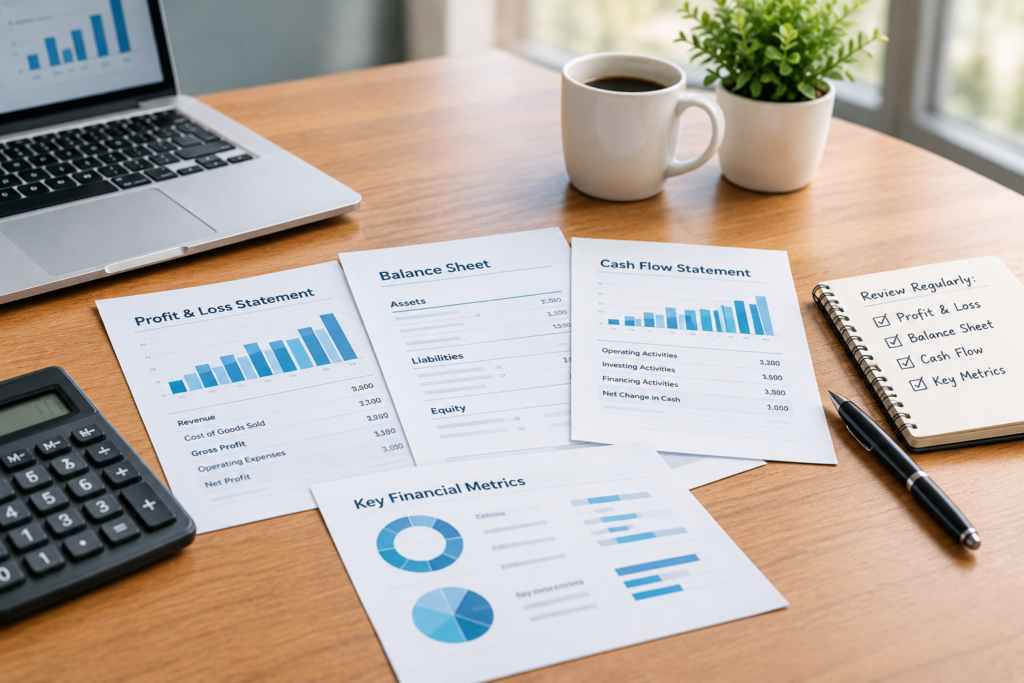
A profit and loss statement shows your revenue, expenses, and the resulting net profit or loss over a specific period, whether that’s a month, a quarter, or a year. Its real value comes from comparison, looking at this month against last month, or this quarter against the same quarter last year, to spot patterns rather than judging a single number in isolation.
2. Balance Sheet
A balance sheet captures a snapshot of your business at one specific moment, listing what you own (assets), what you owe (liabilities), and the resulting owner’s equity. It’s a useful way to understand your business’s overall financial position beyond just how much you made or spent recently, giving you a sense of what the business would look like if you settled everything today.
3. Cash Flow Statement
A cash flow statement tracks actual cash moving through your operating, investing, and financing activities. This is worth separating clearly from profit: a business can show a profit on paper while still running short on available cash, because the timing of when money actually changes hands doesn’t always match when it’s recorded as earned or spent. Reviewing both profit and cash flow side by side gives you a much fuller picture than either one alone.
4. Accounts Receivable Aging Report
This report organizes unpaid customer invoices by how long they’ve been outstanding, often grouped into buckets like current, 30 days, 60 days, and beyond. It helps you spot overdue balances quickly and decide which accounts need a follow-up call first. An invoice sitting in the 60-day column isn’t necessarily uncollectible, but it’s worth paying closer attention to than one that’s still current.
5. Accounts Payable Aging Report
The flip side of the receivable report, this one summarizes what you owe to suppliers and vendors, organized by due date. It supports smarter payment planning and helps you manage short-term cash more deliberately, since you can see everything coming due at a glance rather than discovering it invoice by invoice. This isn’t about delaying payments you’re able to make, it’s about planning around them with more information.
6. Budget-Versus-Actual Report
This report lines up what you planned to earn and spend against what actually happened. Meaningful gaps between the two are worth investigating rather than ignoring, they might point to rising costs, revenue assumptions that didn’t pan out, seasonal patterns you hadn’t accounted for, or simply an area of the business that needs a closer look.
7. Sales or Revenue Report
A sales report breaks down revenue by period, product, service, customer type, or another category that makes sense for how your records are kept. This kind of detail helps you understand where your revenue is actually coming from, though it’s worth remembering that strong sales numbers don’t automatically mean strong profitability, that depends on what it costs you to generate that revenue in the first place.
How Often Should Small Businesses Review Financial Reports?
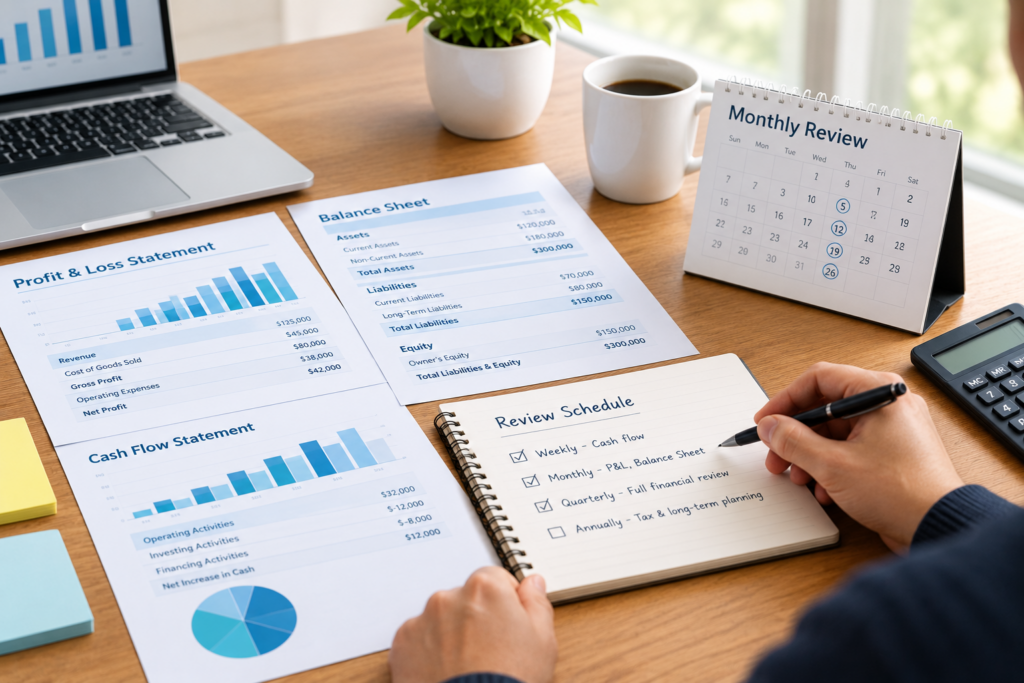
There’s no single right answer here, but many small businesses find value in reviewing core reports monthly, with a deeper look at quarterly and annual trends. Monthly financial reports tend to catch problems while they’re still small and manageable. Businesses with tight cash flow, seasonal swings, rapid growth, high transaction volume, or a pile of overdue receivables often benefit from checking in more frequently than that.
How the Reports Work Together
No single report tells the whole story on its own. Your business financial statements work together, profitability from the profit and loss statement, financial position from the balance sheet, and available cash from the cash flow statement all offer different angles on the same business. Layering in receivables, payables, budget comparisons, and sales data as part of your broader small business accounting reports rounds out the picture considerably. Reviewing them together, rather than in isolation, is where real business financial analysis starts to add value.
How Accurate Bookkeeping Improves Financial Reporting
Reliable financial reporting for small business owners depends entirely on what’s happening behind the scenes. Consistent transaction categorization, regular account reconciliation, organized receipt management, and diligent invoice tracking all feed directly into the reports you eventually review. Skip these steps, or let them fall behind, and even a well-built report will only reflect a partial or outdated version of your actual finances.
When to Seek Professional Bookkeeping Support
A few signs suggest it’s time to bring in outside help: accounts that haven’t been reconciled in months, reports that keep producing numbers that don’t quite add up, or unclear balances you can’t easily explain. Growing transaction volume, bookkeeping that’s fallen behind, business expansion, or simply not having enough hours in the week to keep records current are all reasonable triggers too.
Rakow & Co. offers bookkeeping services built around fixed monthly packages, supported by cloud accounting software like QuickBooks and a dedicated accountant assigned to your business. Whether you’re based in New Jersey or working remotely elsewhere in the US, getting consistent, accurate records in place is often the first step toward reports you can actually trust. If your current reporting feels more like guesswork than insight, booking a
discovery call is a low-pressure way to start that conversation.
Frequently Asked Questions
What financial reports should a small business review regularly?
A profit and loss statement, balance sheet, cash flow statement, receivable and payable aging reports, budget comparison, and sales report.
How often should small business owners review financial reports?
Monthly review works well for many businesses, though frequency should reflect transaction activity, growth, and overall financial complexity.
Why is financial reporting important for a small business?
It provides visibility into profitability, cash movement, outstanding obligations, financial position, and overall business performance over time.
What is the most important financial report for a small business?
No single report is universally most important, since each one offers a different, connected view of the business.
How can financial reports help improve business decisions?
Accurate reports help owners compare performance over time, recognize patterns, manage resources, plan spending, and investigate concerns early.